The AI SDR is the fastest-moving category in sales software right now. The pitch writes itself: a digital sales rep that finds leads, writes outreach, and books meetings around the clock. Search the term and you will find two kinds of content: vendor glossaries defining the category in their own favor, and listicles where the author ranks their own product first.
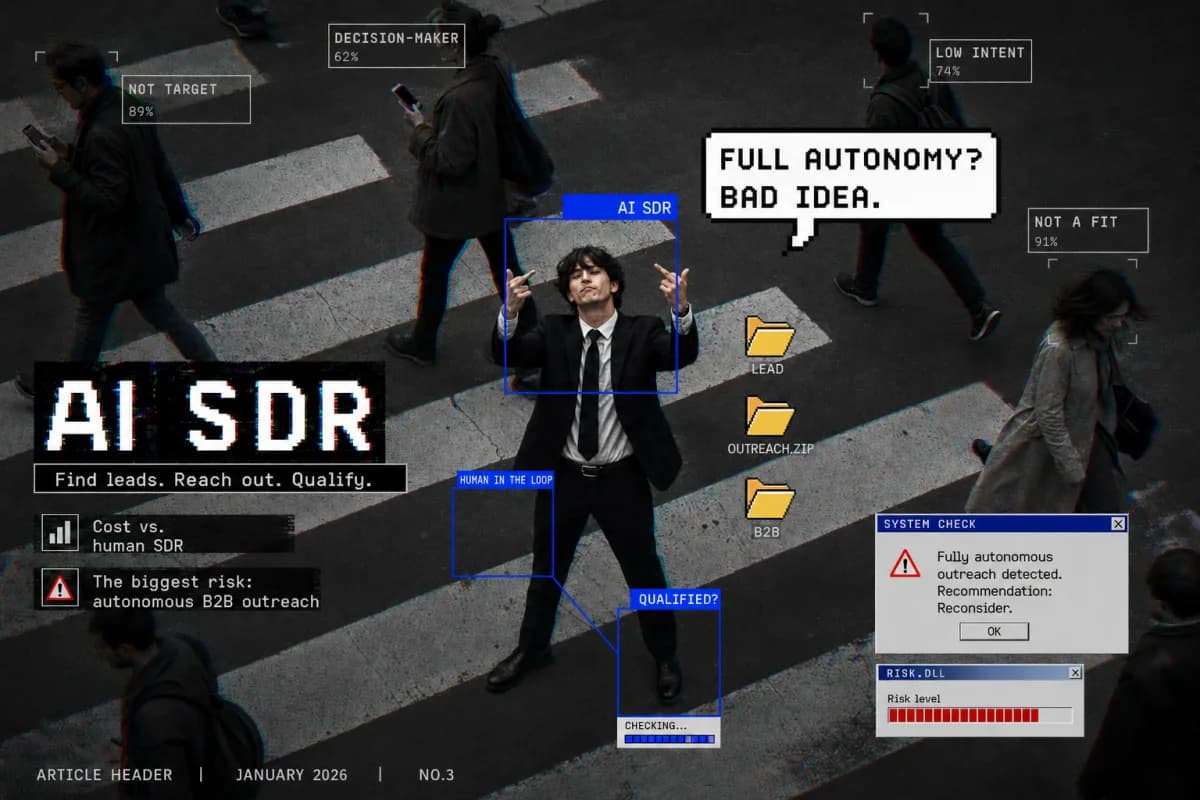
This article does neither. It explains what an AI SDR actually takes off your plate, runs the honest math against hiring a human SDR, and names the thing vendor pages skip: full autonomy is not the feature. It is the biggest operational risk in the category.
TL;DR: An AI SDR handles research, first touches, follow-ups, and pre-qualification, exactly the work that keeps humans from selling: reps spend just 28% of their week actually selling (Salesforce State of Sales, 5th edition, 2023). The cost math favors software by an order of magnitude. But the real differentiator between tools is not price. It is control: systems with human approval before every message protect your sender reputation and your brand; fully autonomous systems put both on the line.
What is an AI SDR? The definition without the vendor spin
A sales development representative sits at the top of the pipeline: they identify, qualify, and nurture potential customers before account executives take over. An AI SDR is software that runs those same early stages: it identifies potential customers, contacts leads, and qualifies opportunities before handing them to the sales team (IBM, 2026).
That much is consensus. The definition gets interesting where it gets contested: the word "autonomous". Vendors like Artisan and AiSDR position their products as autonomous AI SDR agents, self-sufficient digital workers that run the process alone. That is not a technical description but a positioning choice, and it decides who controls every single message that leaves your domain. More on that below.
What an AI SDR actually handles (and what it does not)
The value of the category rests on a sober division of labor. The AI side gets the repeatable work:
- Prospect research: finding companies and contacts that match your ICP, instead of building lists by hand
- First touches: drafting personalized messages based on profile, posts, and context
- Follow-ups: touches two through five, the ones human reps most often drop
- Pre-qualification: reading replies, spotting interest, proposing meeting times
What does not belong on the AI side: discovery calls, negotiation, pricing, and building actual relationships. If that is what you expect to automate, you are buying the wrong category.
Why the division still changes everything shows up in the time data: sales reps spend just 28% of their week actually selling, with the rest consumed by admin, internal meetings, and manual data entry (Salesforce State of Sales, 5th edition, 2023). The AI SDR attacks exactly that 72%. It does not sell better than a human. It hands humans back the hours in which selling happens.
The autonomy trap: why "fully autonomous" is the wrong selling point
The loudest promise in the category is the employee who never sleeps and never needs review. That promise deserves skepticism, and the skepticism comes from users, not critics. One of the top-ranking results for "ai sdr" is not a vendor page. It is a Reddit thread asking "Has anyone found an AI SDR that actually works?" (r/SaaS, 2025). When the most-clicked question about a category is whether anything in it works, that says more than any product page.
The problem with fully autonomous systems is structural, not a matter of prompt quality. An AI that sends without approval scales its errors along with its wins: the misread context, the generic phrasing, the wrong tone to the wrong decision maker. In email, the bill arrives as sender reputation damage, and that bill got much bigger after Google and Yahoo tightened bulk sender requirements with enforced spam-rate thresholds (Google, 2023). On LinkedIn, the worst case is losing the account. And unlike a human mistake, a machine mistake happens a hundred times before anyone notices.
Even sales intelligence vendors who benefit from the AI boom draw the same line: the working model is the AI-augmented SDR, not the replaced one; AI where work is repeatable, humans where judgment wins (Cognism, 2025). Analyst research backs the skepticism: Gartner predicts AI agents will outnumber sellers ten to one by 2028, yet expects fewer than 40% of sellers to report that those agents improved their productivity (Gartner, 2025).
Human-in-the-loop, meaning a person approves every outgoing message, is therefore not a fallback you settle for. It combines machine scale with the error rate of a human who reads every message before it ships.
The honest math: AI SDR vs. human SDR
Here is the odd thing about this category: pricing questions dominate the search demand, yet almost no comparison article runs the numbers. Some vendors do not publish numbers at all. Artisan, for example, lists no prices for its AI employee "Ava"; every tier routes through a sales call (Artisan Pricing, 2026).
The human side of the ledger is well documented. A US sales development representative earns $50,000 to $68,000 in base salary, with on-target earnings of $65,000 to $95,000 (RevPilots, 2026); Payscale's profile data lands in the same corridor, with an average base of $51,677 and total pay of $45,000 to $82,000 (Payscale, 2026). That is roughly $4,200 to $5,700 per month in base pay alone, before payroll taxes, benefits, tooling, recruiting, and the standard multi-month ramp. On the software side, published pricing spans an order of magnitude: AiSDR runs $250 per month solo, $900 on its most popular tier, and $2,500 at scale (AiSDR Pricing, 2026). A LinkedIn-first system like 36leads runs €199 per month on the Growth plan.
One framing matters here: the math is not "AI instead of humans". An AI SDR does not replace an account executive and does not run discovery. The realistic calculation: a team that cannot justify a dedicated SDR hire gets the SDR work layer for a fraction of the payroll cost. A team that has SDRs hands them back the 72% of the week they currently lose to non-selling work.
Precision beats volume, even in a big market
Most AI SDR vendors run an email-first, volume-first playbook: bigger lists, more sequences, more touches. Three shifts in the US market work against it.
First, deliverability enforcement. Since Google and Yahoo rolled out bulk sender requirements with authentication mandates and enforced spam-rate thresholds, high-volume cold email carries structural risk: cross the threshold and the domain, not just the campaign, pays (Google, 2023). CAN-SPAM keeps cold email legal as an opt-out regime (FTC, 2024), but legal and deliverable are two different things. We compared the trade-offs in detail in our guide to cold outreach alternatives for B2B.
Second, buyer fatigue. Decision makers see the same AI-written openers dozens of times a week now. The pattern-matching goes both ways: the faster generic AI outreach scales, the faster it gets filtered, mentally and technically. What survives is the message that reads like a person wrote it for one recipient, which is exactly what an approval step enforces.
Third, the channel question. LinkedIn outreach lands in a professional context where a connection request plus a relevant message is an accepted norm, not an intrusion, and the platform's own rate limits force quality over volume. How that plays into a full pipeline, from visibility to booked meetings, is covered in our guide to B2B lead generation in 2026.
How to evaluate AI SDR tools: five questions
Most "best AI SDR tools" lists are written by vendors ranking themselves first; Saleshandy's own list opens with Saleshandy in position one (Saleshandy, 2026). So instead of another list, here are the five questions that actually separate the tools:
| Criterion | Question to ask | Red flag |
|---|---|---|
| Approval | Does the system send autonomously, or does a human approve every message? | "Fully autonomous" as the headline promise |
| Channel | Email-first or LinkedIn-first? | High-volume email playbook with no deliverability plan |
| Targeting | Can you filter your ICP by industry, function, seniority, and region? | Volume packages without filter logic |
| Data source | Live from the prospect's profile and recent posts, or a purchased database? | Contact data with no stated origin |
| Pricing | Is the price list public on the website? | "Book a demo" instead of numbers |
The approval question is the core architecture decision, not a feature checkbox. Running our own campaigns at 36leads, we see the same pattern week after week: the messages that got a human touch during approval are consistently the ones that turn into conversations. Approval is not a brake. It is the quality filter.
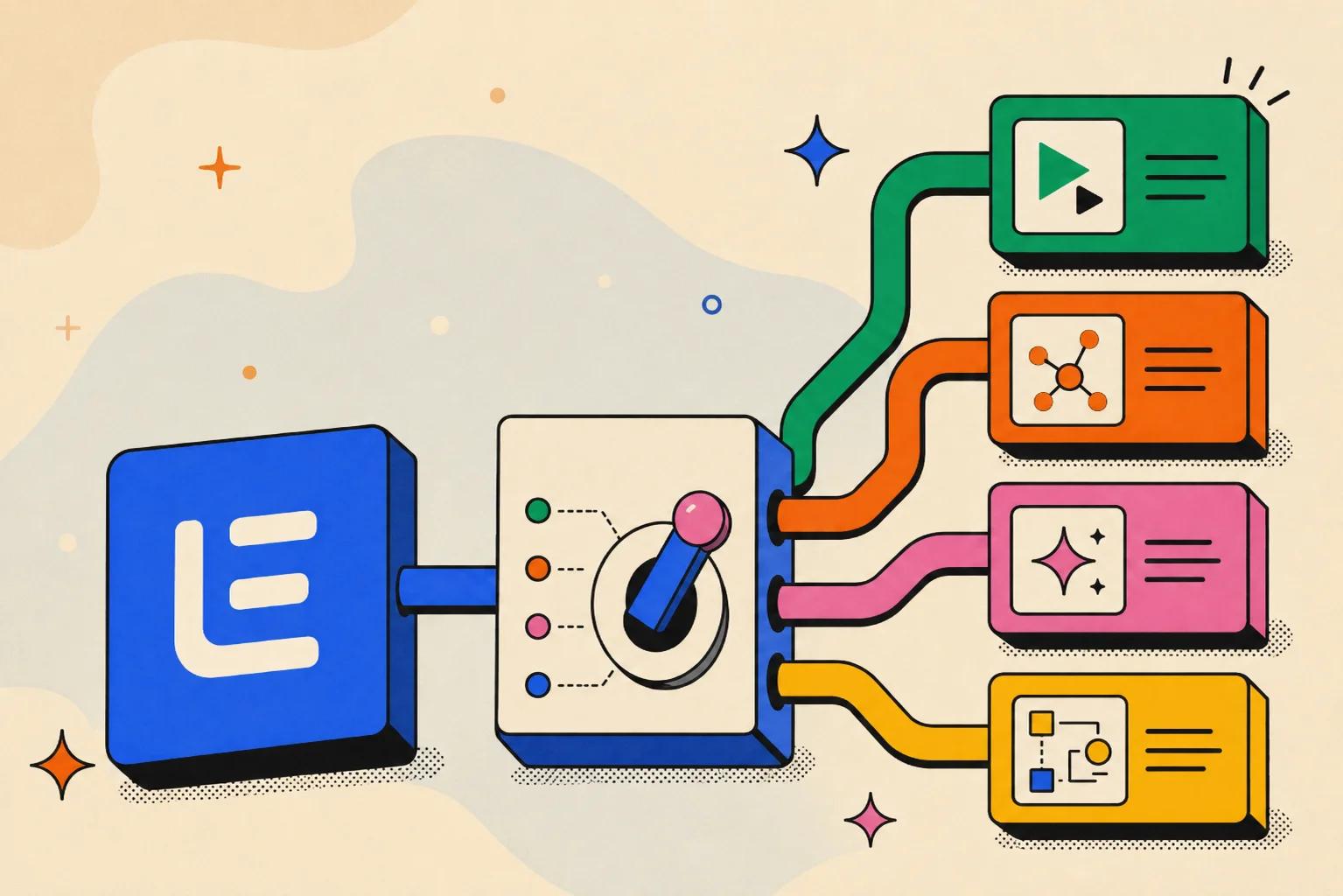
Full transparency on where we stand: 36leads is an AI SDR system built on the human-in-the-loop model, LinkedIn-first, with ICP filters for industry, function, and seniority, and public pricing. Content creation, prospect search, AI conversations, and meeting booking run in one cockpit, and nothing goes out without approval. For how that differs from pure automation tools, see our LinkedIn automation tools comparison.
Bottom line
The AI SDR is not magic, and it will not replace sales skill. What it does is automate the work layer that eats most of a seller's week: find, reach out, follow up, pre-qualify. The cost math clearly favors software. The real decision sits elsewhere: between systems that send autonomously and put your reputation at risk, and systems that scale while routing every message through a human approval.
If you take one thing from this article, take this: judge an AI SDR by the quality of its control, not the promise of its autonomy. See what that looks like in practice in the feature overview, find your entry point in pricing, or start a conversation via contact.
Sources
- IBM: How AI SDRs are Redefining Sales, 2026
- Salesforce Newsroom: State of Sales, 5th edition, 2023
- RevPilots: SDR Salary Guide 2026
- Payscale: Sales Development Representative Salary, 2026
- Gartner: AI Agents Will Outnumber Sellers by 10X by 2028, 2025
- AiSDR: Pricing, 2026
- Artisan: Pricing, 2026
- Cognism: Will Sales Be Replaced by AI, 2025
- Google: New Gmail protections for a safer, less spammy inbox, 2023
- FTC: CAN-SPAM Act Compliance Guide, 2024
- Saleshandy: 9 Best AI SDR Tools in 2026
- Reddit r/SaaS: Has anyone found an AI SDR that actually works, 2025
Frequently asked questions
An AI SDR is software that uses artificial intelligence to handle the early stages of the sales process: identifying potential customers, contacting leads, and qualifying opportunities before handing them to the sales team ([IBM](https://www.ibm.com/think/topics/ai-sdr), 2026). In practice, an AI SDR agent automates the repeatable top-of-funnel work a human sales development representative would otherwise do.

Stanislav Soziev
Founder at 36leads
Stanislav Soziev is the founder of 36leads, a B2B LinkedIn automation platform used by founders, SDRs, and marketing teams across DACH. He has spent the last decade shipping growth and sales systems, blending technical execution with go-to-market strategy. He writes about LinkedIn outbound, AI-assisted pipeline generation, and the mechanics of turning attention into qualified meetings.
LinkedInYour next 10 qualified leads start here.
Build your LinkedIn outbound, content, and AI conversations inside one cockpit. Nothing goes out without your approval.